Emergency Contacts

DIAL 9-1-1 IN AN EMERGENCY FOR FIRE, POLICE, MEDICAL

Office of the Building: (312) 252-6300

Police/Fire Non-Emergency: 311

In the event of an emergency, call 9-1-1 and provide the following information:

  • Building Address: 57-65 East Oak Street, Chicago IL 60611
  • Location in the Building: Store/Restaurant Name, Floor Location
  • Nature of the Call: Type of Emergency/Condition of the Victim
  • Name of Caller and Phone Number Calling From

After calling 911, ALWAYS make a secondary call to the Office of the Building (312) 252-6300.

Depending on the nature of the incident, Building Management can communicate an emergency situation and response measures via several means, including, but not limited to the following:

  • RedFlag Announcements – RedFlag is 65 Oak Street LLC’s mass alert notification system. Email, text, and/or voice call alerts are sent to the pre-designated tenant contacts, informing them of an emergency situation and possible response measures.
  • Email Alerts – Email Alerts are similar to RedFlag messages in which Building Management may send email messages to tenant contacts alerting them to building conditions.
Bomb Threat

A bomb threat may be received by various means such as mail, phone, email, or word of mouth. Though most bomb threats are found to not have posed imminent danger, all threats should be considered serious.

Upon receiving word from the Chicago Police Department as to the level of threat to building occupants, Building Management will make the appropriate tenant notifications via the emergency communication systems.

If a bomb threat is received via phone:

  1. Keep calm and continue talking to the caller
  2. Signal a co-worker to call Security
  3. Utilize a bomb threat checklist (see attachment) to gather as much information as possible
    – Time call was received
    – Time bomb is to explode
    – Location of bomb
    – Description of bomb
    – Exact words/demands of caller
    – Note caller’s voice and background noises
  4. Repeat questions if necessary

Click here to download a Bomb Threat Checklist.

Upon receiving word from the Chicago Police Department as to the level of threat to building occupants, Building Management will make an appropriate announcement to affected floors via the emergency communication systems.
Suspicious Package
If a suspicious item or package is discovered, it should never be handled. Vacate the immediate area. Notify your security and the Office of the Building (312) 252-6300.
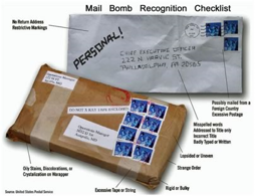
It can be difficult to ascertain what is suspicious and what is not, but some common characteristics of a suspicious package may include:
For further information, reference the US Postal Service Resources on mailroom security
Civil Disturbance

A civil unrest situation can take multiple forms, but usually begins as a protest or demonstration outside the building’s property line or entrances. In worst case scenarios, the protesting group can enter the building’s perimeter and disrupt operations for the property and pose a safety risk to tenants and guests.

Refer to your internal response procedures and notify 911 if there is an immediate threat. Tenants should also monitor official news outlets for updates.

Elevator Entrapment

Though modern elevators are extremely safe and inspected frequently, service interruptions may occur. If you encounter an elevator stoppage, do not attempt to force the elevator doors open.

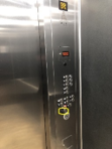
Remain calm and press the red emergency call button (see picture below) to speak with KONE Help Line. Provide KONE Help Line the following information:

  • Your name and company
  • Number of passengers and their condition
  • Floor on which the elevator stopped
  • Direction of travel and destination (e.g. going down from the 11th floor to the lobby).
  • If you feel claustrophobic or ill, sit down on the floor. But be sure to tell
  • If you need medical attention and Chicago Fire/paramedics will be contacted.

Again, you should never attempt to exit the cab on your own. It is always safer to stay in the cab until assistance arrives.

For the safety of you and others, always report elevator service issues to Building Management, even if the issue does not result in an entrapment.

Fire/Smoke

Evacuations are one of two primary responses made in an emergency situation. In most cases, evacuations will be ordered by the Chicago Fire Department or Building Management/Security, but Life Safety Team members can order a floor/area evacuation if they deem unsafe conditions (e.g. smoke). There are two primary evacuation types:

  1. Full Building Evacuation
  2. Partial Building Evacuation (affected tenant only)

In the event you discover smoke and/or fire, call 911 and provide the following information:

  • Building Address: 57-65 East Oak Street (tenant name)
  • Floor and Location of emergency
  • Your name and phone number

Notify Building Management at (312) 252-6300.

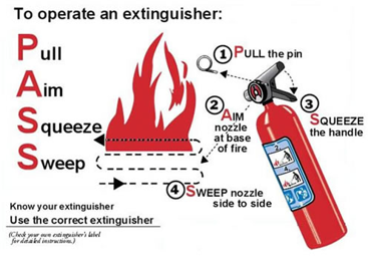
Fire extinguishers are located throughout the building (reference your specific office space configuration), including all stairwell landings. All building fire extinguishers are rated for Class ABC fires and should only be used by trained personnel and only when safe to do so. When operating a fire extinguisher, use the PASS method.

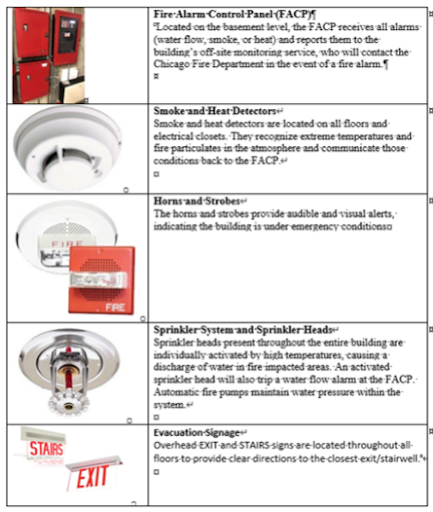
During an evacuation, the strobes will be activated and directives will be relayed via the PA system and/or your Life Safety Team. Close doors behind you but do not lock them. If there is smoke, keep low to the floor where the air will be cleaner and cooler. Feel doors before opening; if hot, do not open.
In any evacuation, never attempt to use an elevator to avoid the possibility of entrapment. Once a fire alarm is activated, elevators are only serviceable for first responders, so any attempt to use the elevators may hinder emergency response and/or delay the evacuation process.
Guidelines for stairwell use:
  1. Remain calm and do not run or skip steps to avoid injury
  2. Do not take items with you, such as personal objects, laptops, or food/drinks
  3. Use the right side of the stairwell and use handrails for support
  4. Keep noise levels to a minimum
  5. Listen for PA announcements and follow directives, as you may be asked to transfer to another stairwell.
  6. Use Area of Rescue boxes to contact Security for any issues or to communicate people needing assistance on stairwell landings
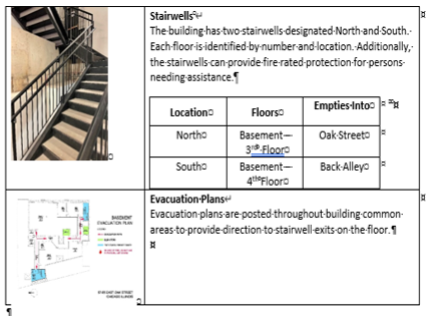
  7. Follow signage to first-floor exits
After evacuating the building, move quickly to your company-designated exterior meeting place to await an ALL CLEAR and further instruction from your Life Safety Team.
Fire Extinguisher - Pass Method

Fire Prevention
Appoint one person who will be responsible for ensuring that appliances such as coffee machines are shut off at the end of each business day.
Additional prevention measures are as follows:
Report all fire hazards such as blocked stairwells, inoperative exit signs and storage of flammable materials to your Fire Warden and Building Management. All corridors and passageways should be kept free of storage boxes.
  • Ensure that all appliances are U.L. approved.
  • Do not use space heaters. They can overload electrical circuits and pose a fire hazard.
  • Report and repair appliances that are not in good working order. Short circuits or sparks from a frayed cord could start a fire.
  • In the designated smoking areas, dispose of cigarettes and all other smoking materials in metal receptacles, not in wastepaper baskets.
  • Know the location of your floor’s fire extinguishers and stairwell exists.
  • Participate in your floor’s emergency drills to familiarize yourself with the building’s fire alarm signal, stairwell exits and your floor’s evacuation plan.
  • Verify that you can hear the building’s emergency communications system from your office, as well as from all points on your floor. Building
  • Management conducts speaker tests on each floor annually.
  • Know how to use a simple fire extinguisher and how to report a fire.
Medical Emergency

In the event of an accident or illness involving an employee or visitor in your office area, immediately call 911 and provide the following information:

  1. Building Address: 57-65 East Oak Street (tenant name)
  2. Floor and location of emergency
  3. Nature of emergency and condition of subject
  4. Your name and phone number

As with any emergency, always place a secondary call to Building Management (312) 252-6300.

Please ensure an employee is sent to meet first responders upon their arrival to guide them to the incident location in order to maintain an efficient response

If safe to do so, remain with the person needing attention and do not attempt to move the person unless they are in immediate danger.

Severe Weather

Impending severe weather emergencies (e.g. tornados) will be broadcast via Chicago’s emergency alert systems, including a series of sirens located throughout the Central Business District.

Loud wavering siren (pitch goes up, then goes down) – indicates an emergency condition exists and shelter should be taken.

Long steady siren – indicates the threat has passed and is “ALL CLEAR.”

Direct employees and guests away from windows and exterior walls toward the core of the building. The north and south stairwells can and should be utilized.

In addition to sirens, cell notification alerts are available through Chicago’s Office of Emergency Management & Communications (OEMC).

Workplace Violence

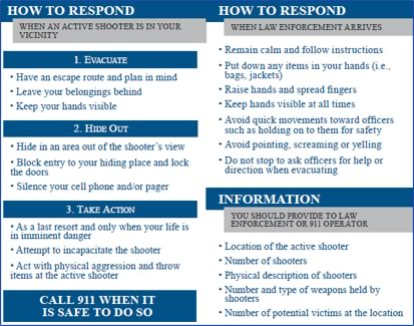
Workplace violence incidents, including active shooter situations, require immediate action.

Upon notification by Building Management of a threat within the building, tenants not directly impacted should lock entry doors, shut off lights, and seek securable or safe areas within their floors where employees can shelter-in-place. These areas might include file rooms, restrooms, conference rooms, IT rooms, closets or under desks. The primary goal is to remain quiet and out of sight until an ALL CLEAR is given by Building Management or Chicago Police.

It is important to note that each tenant should discuss workplace violence situations and identify specific company response measures for their employees.

Tenants directly impacted by a threat on their floor should implement the “Run, Hide, Fight” framework. As with any emergency, 911 should be contacted along with Building Management at (312) 252-6300 when it is safe to do so.

The City of Houston, in conjunction with the Department of Homeland Security (DHS) created a training video titled, “Run. Hide. Fight. Surviving An Active Shooter Event”

For additional resources, reference the DHS website on Active Shooter Preparedness.

Tenant Life Saving Training

In addition to the written materials provided, Building Management, upon request, can conduct on-site life safety training sessions. During these training sessions, the tenant’s role and responsibilities for emergency response are defined across multiple incident types (e.g. fire, active shooter, severe weather).

The building can also arrange training on supplemental safety topics such as fire extinguisher use and first aid (CPR, AED).

Tenant Life Safety Drills

Building Management may periodically perform safety drills, with mandatory participation by all tenants and their employees.

Tenant Life Safety Personnel

Each tenant should maintain an on-site emergency response team, likely composed of management personnel, whose responsibilities during emergencies and evacuations include but are not limited to:

  • Maintain calm and keep occupants calm by example of your composure
  • Determine if fire corridors or main entrances are safe for exiting
  • Direct occupants to safe exits
  • Guide employees as needed to relocation areas
  • Assist impaired persons to safe location
  • Check space for hidden or lost occupants prior to vacating the space
  • Check that emergency exits are properly closed
  • Accounting for all employees who are working at the time of the emergency
  • Notify first responders, corporate personnel and building management, as appropriate.
Building Staff Life Safety Training

Building Staff Life Safety Training

The building’s Fire Safety Director is responsible for training of building staff for the purposes of effective emergency response and keeping Emergency Plans and Procedures workable and current. Training of building staff consists of the following:

  • Quarterly Table-Top scenarios for Building Management staff
  • Annual, and as needed, CPR/AED (re)training for select management personnel.
  • Participation in tenant drills
Life Safety Systems

65 East Oak Street LLC has been designed to provide a safe environment for its occupants. The building is constructed with fire resistant materials, a full capacity sprinkler system, and a fire alarm system that meets the City of Chicago building code.

Utility Interruption

In the event of a utility interruption, such as a power outage, remain calm and notify your Tenant Management Team and Building Management. Most outages will be temporary and the building is equipped with emergency lighting to ensure a safe exit. For a power outage or utility issue, follow the below procedures if it is safe to do so:

Assist others in your immediate area and proceed with caution to an area with lighting (natural lighting or emergency lighting).

Turn “OFF” all computers and electrical devices at your workstation. For issues involving a water leak, do not touch or go near electrical equipment.

If you are on an elevator during an outage, the elevator will lower to a safe floor. If you experience an issue, press the emergency call button to reach the elevator service provider’s operations center.

Each space should house emergency equipment such as a flashlight with extra batteries to utilize during the event of a power outage. All employees should be advised as to where emergency equipment is located.